
Developmental Delay in Children: Causes, Early Signs, and When to Seek Help in Trivandrum
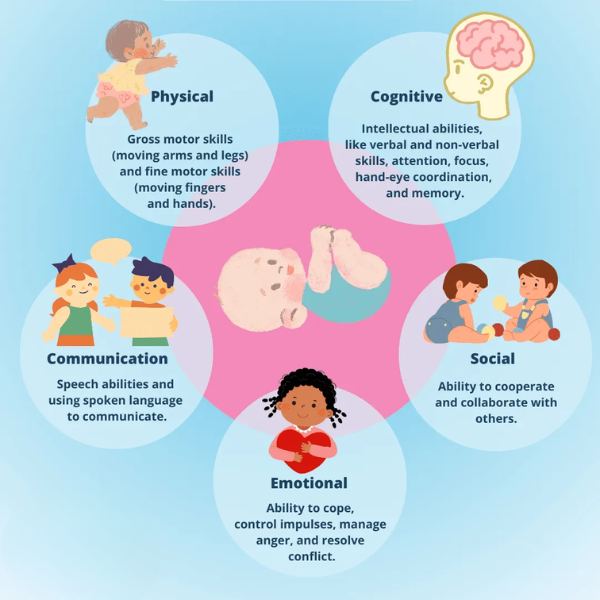
Developmental delay refers to a condition where a child does not achieve developmental milestones at the expected age compared to peers of the same group. It can result from difficulties in one or more key areas, including gross and fine motor skills, speech and language, cognition and performance, social and emotional development, psychological or sexual development, and activities of daily living (ADL). The delay may be isolated (affecting a single domain), multiple (involving two or more domains), or global (impacting most developmental areas). Early identification and timely intervention are crucial to prevent long-term disabilities. Based on the number of domains affected, developmental delays are classified into three types:
- Isolated Developmental Delay – involving only one domain.
- Multiple Developmental Delays – involving two or more domains.
- Global Developmental Delay (GDD) – involving significant delay across most developmental areas.
Causes
The cause of developmental delay is multifactorial, with most cases being idiopathic. Known causes include genetic, environmental, and/or psychosocial factors. Genetic factors may involve chromosomal abnormalities, copy number variants, or gene mutations, as seen in conditions like Fragile X syndrome, Down syndrome, Edward syndrome, Patau syndrome, Prader-Willi, Angelman, Rett, and Coffin-Lowry syndromes. Developmental patterns can also be familial, such as late walking or talking. Environmental factors, including prenatal, perinatal, or postnatal influences, may disrupt normal development at various stages, contributing to developmental delays or disorders.
Early Signs of Developmental Delay in Children
Motor: Trouble walking, crawling, or grasping toys; clumsy or avoids climbing.
Speech: Says few words or doesn’t combine them by age 2; points instead of speaking.
Social: Avoids eye contact, doesn’t play or share; seems shy or withdrawn.
Cognitive: Struggles with colors, shapes, or simple tasks.
Daily Skills: Needs help feeding, dressing, or brushing teeth beyond age 2
Therapies for Children with Developmental Delays at Sound Plus
Physiotherapy:
Builds strength, balance, and coordination for children with gross motor delays, such as walking or climbing difficulties. Helpful for conditions like cerebral palsy or muscular dystrophy.
Occupational Therapy:
Improves fine motor and sensory skills like writing, grasping, and self-care. A “sensory diet” may be used to boost focus and adaptability, especially for children with autism or sensory issues.
Speech & Language Therapy:
Enhances speech, pronunciation, and understanding. Supports children with expressive or receptive language delays and helps with feeding issues due to oral motor weakness.
Cognitive Behavioral Therapy (CBT):
Helps manage anxiety, shyness, and behavior problems. Involves parents to apply learned coping and behavior strategies at home.
